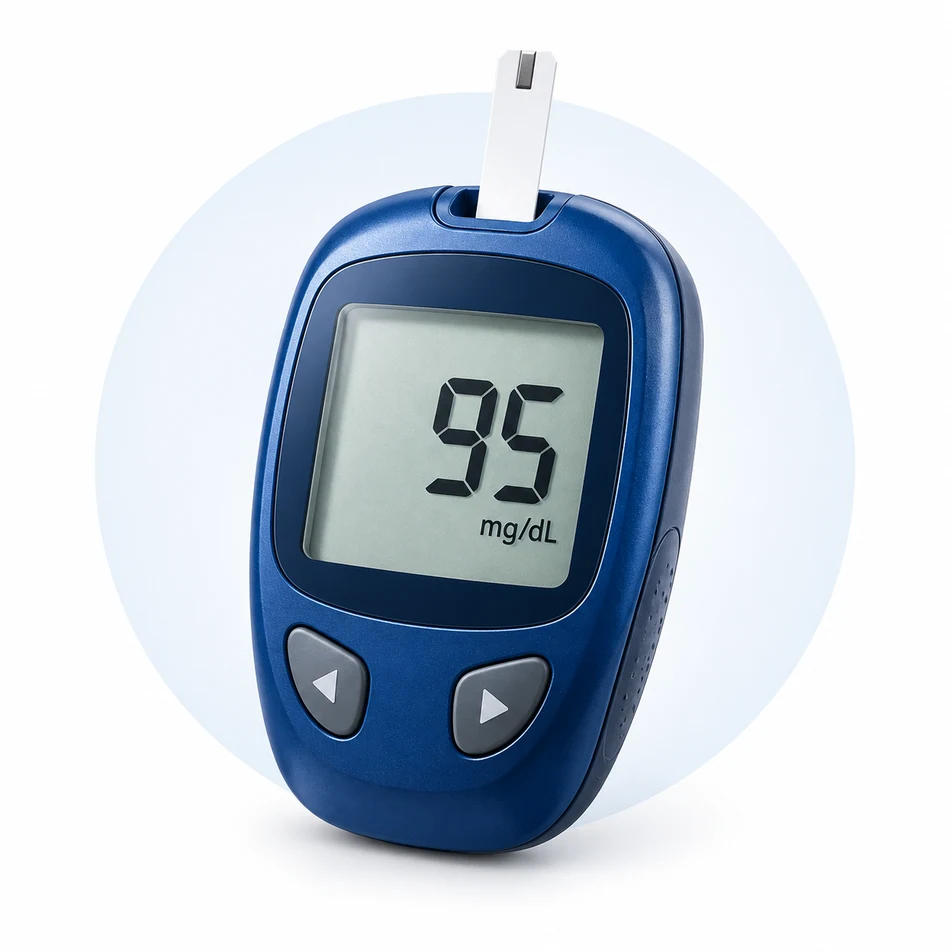
Gestational diabetes is a metabolic change during pregnancy. It is treatable, and with the right support you have a strong foundation for your baby's healthy development.
During pregnancy, the body produces more hormones. These can make it harder for glucose in the blood to enter the cells. Blood glucose rises; this is known as gestational diabetes. It usually develops in the second half of pregnancy and generally goes away after birth.
A glucose tolerance test is usually performed between weeks 24 and 28 of pregnancy. Blood glucose is measured before and after drinking a glucose solution.
If diet and physical activity are not enough, insulin can lower blood glucose levels. Around one in six to eight women with gestational diabetes needs it. Insulin does not cross the placenta to the baby. Treatment is usually no longer needed after birth.
Further information:
Why is treatment important?
Supports your baby's healthy development
Reduces the risk of complications during pregnancy and birth
A normal birth is usually possible
A good chance that blood glucose will return to normal after birth
The images are illustrations and do not show treatment outcomes in real people. This information does not replace individual medical advice; treatment is tailored to your situation.
Understanding diabetes in pregnancy
Diabetes that develops during pregnancy is called gestational diabetes. The illustration explains how it develops, diagnosis through a glucose tolerance test, treatment and the importance of care for mother and child.